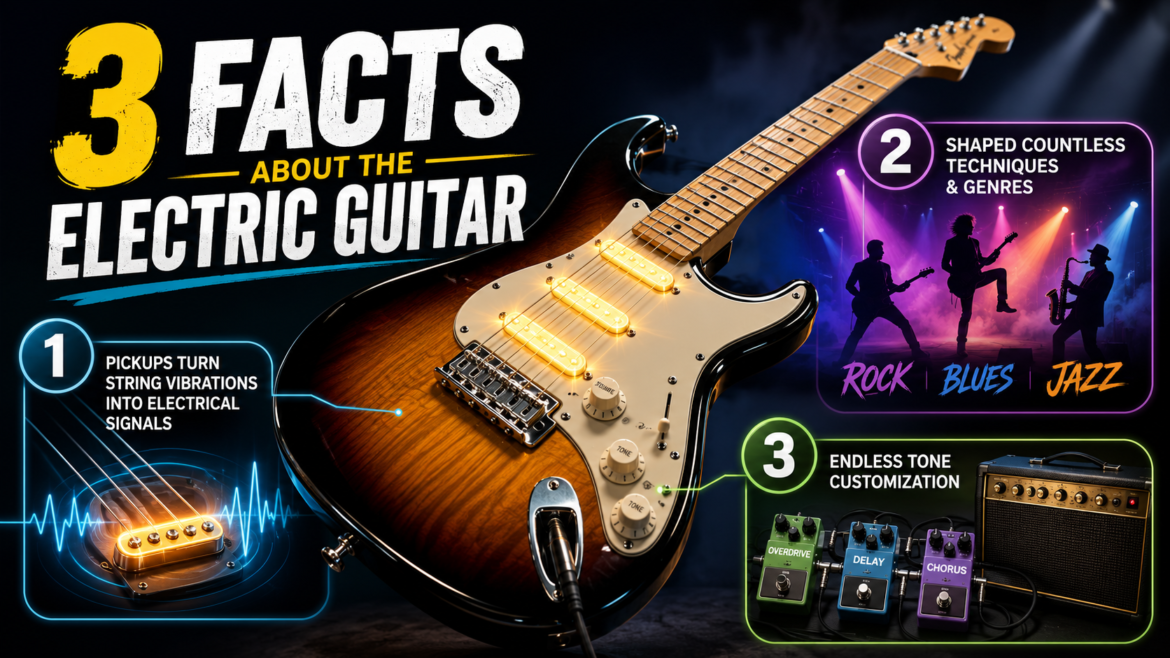
The electric guitar changed music in ways big and small. Here are three clear, well-explained facts about the electric guitar that answer the question directly and help readers understand why this instrument matters, how it works, and how it shaped modern sound.
What is an electric guitar?
The electric guitar is a stringed instrument that uses pickups and electronic amplification to turn string vibrations into sound. Unlike acoustic guitars, which rely on a hollow body to amplify vibrations, electric guitars use magnetic or piezoelectric pickups to capture string movement and send it through an amp and speaker. This design allows the electric guitar to play at high volumes, be shaped for comfort and style, and access a wide range of tones by changing pickups, amplifiers, and effects.
Fact 1 — Electric guitars use pickups to convert vibrations into electrical signals
- How pickups work: Pickups are small devices mounted under the strings that sense string vibrations and convert them to electrical signals. The most common type is the magnetic pickup, which contains magnets wrapped in wire. When a steel string vibrates above the pickup, it disturbs the magnetic field, inducing an electrical current that mirrors the string’s vibration.
- Types of pickups and how they affect tone: Single-coil pickups produce bright, clear sounds with pronounced high-end detail. They’re great for clean tones and styles like country and blues. Humbucker pickups pair two coils out of phase to cancel hum and produce thicker, warmer tones preferred for rock and jazz. There are also P-90s (a bright but fuller single-coil variant), active pickups (which use a battery-powered preamp for higher output and clarity), and piezo pickups (which sense actual string or bridge vibrations, often used for acoustic-like tones).
- What happens next: The pickup’s electrical signal is sent to an amplifier and speaker, and can be processed by pedals or onboard amp effects. Volume and tone controls on the guitar and amp shape the final sound. This conversion chain—strings to pickup to electronics—lets players sculpt everything from clean chime to heavily distorted roar.
Fact 2 — Electric guitars enabled new playing techniques and genres
- Playing techniques born from electrification: The electric guitar’s loud, sustained sound opened the door to techniques that weren’t practical on acoustic guitars. Distortion and overdrive—initially accidental from overdriving tube amplifiers—became sought-after tones. Techniques like bending strings, vibrato with tremolo/whammy bars, palm muting, tapping (using both hands on the fretboard), and heavy use of feedback rely on amplified sound and are staples of many modern styles.
- How it shaped genres: The electric guitar is central to rock, metal, punk, and many subgenres of pop. Blues musicians electrified to be heard in clubs and street performances, which pushed blues toward rock’n’roll. Jazz guitarists embraced archtop electrics and hollow-body electrics for warm, clean tones. Country and surf music developed signature twang and reverb-heavy sounds made possible by amplification and effects. Without electric guitars, post-1950s popular music would sound fundamentally different.
- Iconic player influence: Players such as Chuck Berry, Jimi Hendrix, B.B. King, and Eddie Van Halen expanded what the instrument could do. Their techniques—Hendrix’s feedback and wah-wah explorations, Van Halen’s two-handed tapping, B.B. King’s expressive vibrato—show how amplification and experimentation changed musical language.
Fact 3 — The electric guitar’s tone is shaped by many components, making it highly customizable
- Body, wood, and construction: Solid-body, semi-hollow, and hollow-body designs produce different natural resonances. Solid-body guitars minimize feedback and sustain certain tones well, making them common in rock. Semi-hollow and hollow bodies offer warmer, airier tones favored in jazz and blues. Wood choice (alder, ash, mahogany, maple, etc.) changes resonance and attack subtly.
- Neck and fretboard: Scale length, neck shape, and fretboard radius affect playability and feel. Shorter scale guitars have a slinkier string tension, while longer scales offer tighter tension and brighter attack. These physical differences change how the instrument responds to playing, influencing tone and comfort.
- Pickups and electronics: As noted above, pickup type and placement (neck vs. bridge) dramatically alter tone—neck pickups are warmer and rounder, bridge pickups are brighter with more attack. Onboard wiring, pot values, and tone capacitors further color the signal before it reaches the amp.
- Amplifiers and effects matter most: The amplifier and effects chain shape much of the final sound. Tube amps add harmonic warmth and natural compression; solid-state amps offer cleaner, more transparent tones. Pedals like distortion, overdrive, delay, reverb, chorus, and compression let players craft everything from subtle coloration to extreme textures. This modularity means a single guitar can cover many sonic roles depending on the rest of the signal chain.
- Customization culture: Because tone comes from many parts, players and builders swap pickups, change bridges, upgrade wiring, or mod electronics to tailor sound and feel. Boutique builders and mass manufacturers both offer wide options, while DIY mods are common—making the electric guitar one of the most personalized instruments.
Why these three facts matter to players and listeners
- Practical playing impact: Knowing how pickups work and how body type or scale length affects feel helps players choose an instrument that matches their style and comfort. Players can select pickups or adjust their signal chain to get the tone they hear in their head without guesswork.
- Cultural importance: The electric guitar’s role in creating new techniques and sounds explains why it became the defining instrument in many popular genres. Understanding this history helps musicians and fans see how innovation, technology, and creativity interact.
- Creative flexibility: The electric guitar’s modular tone system (guitar, pickups, amp, effects) gives players almost unlimited sonic possibilities. Whether you want a clean jazz comping sound, a crunchy blues rhythm, shimmering surf tones, or face-melting metal leads, the electric guitar can deliver with the right setup.
Simple examples to illustrate each fact
- Pickup example: A Strat-style guitar with single-coils gives bright, bell-like tones great for clean rhythm. Swap to a humbucker and the same instrument gets thicker and darker, better for distorted rock.
- Technique example: A guitarist who wants long, singing notes and expressive bends benefits from amplification and a neck pickup that emphasizes warmth and sustain. Using an overdrive pedal and light reverb gives those notes a musical presence that wouldn’t carry on an unplugged acoustic.
- Customization example: Two players can use the same model guitar—one with thin strings, light gauge, and an amp set to moderate overdrive; the other with thicker strings, a bridge humbucker, and heavy distortion—and produce completely different sounds suited to pop or metal respectively.
Quick buying and practice tips (actionable and brief)
- Try pickups in person: Play guitars with single-coils and humbuckers through an amp before buying. Tone differences are immediate.
- Match body type to style: Choose solid-body for high-gain rock and semi/hollow for jazz, blues, or cleaner tones.
- Learn amp basics: A small practice amp with EQ and reverb teaches how amp settings affect tone. Use one pedal at a time to understand its effect.
- Prioritize feel: Neck shape and fretboard comfort matter for long practice sessions more than subtle tone differences.
Electric Guitar’s Core Story Is Simple
The electric guitar’s core story is simple: pickups turn string motion into electricity, amplification made new sounds and techniques possible, and the instrument’s many parts let players tailor tone widely. Those three facts explain how the electric guitar works, why it changed music, and why it remains endlessly adaptable.