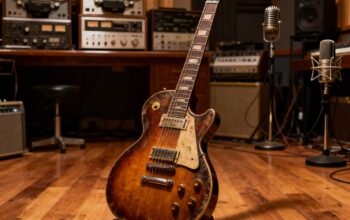
When you think about the electric guitar, you’re imagining an instrument that transformed music forever. Let’s dive into the fascinating story of who first started playing this groundbreaking instrument.
The First Electric Guitar Innovators
Charlie Christian is widely recognized as the first significant electric guitar player who changed music history. Around 1936, he began using an acoustic guitar with a pickup attached to the body, specifically to play solos in his jazz band. This moment is considered the birth of the electric guitar as we know it.
Early Experimental Moments
Before Christian’s breakthrough, the first fully functioning electric guitar was actually the Ro-Pat-In Electro A-25 “Frying Pan”, created in 1932. This instrument made its public performance debut when Gage Brewer played it in Wichita, Kansas. Imagine being in that audience, hearing an entirely new sound that would revolutionize music!
The Pioneers Who Shaped Electric Guitar History
Les Paul: The Innovator
Les Paul wasn’t just a player – he was a true inventor. In 1940, he created “The Log”, a prototype solid-body electric guitar made from a 4×4 wooden stud. His goal was to solve two major problems with existing guitars: feedback and sustain.Paul’s innovative approach involved:
- Creating a guitar from a single piece of wood
- Reducing sound resonance issues
- Experimenting with unique design techniques
Leo Fender: Bringing Electric Guitars to the Masses
While Les Paul experimented, Leo Fender saw the commercial potential. In 1949, he released the Fender Esquire (later renamed the Telecaster), which is considered the first modern electric guitar. Fender’s design would become legendary, inspiring generations of musicians.
The Cultural Impact
Electric guitars quickly became more than just instruments – they became cultural icons. By the 1950s, innovative electric guitars were being released consistently, with the modern electric guitar essentially completed by 19601.Interesting Guitar Evolution Facts:
- The Gibson ES-150 in 1936 was the first widespread commercial success
- Electric guitar designs became so iconic that companies now sell miniature models of famous guitars
- Innovations continue, with 21st-century technology potentially introducing features like touch sensors for timbre control
Why Electric Guitars Mattered
Musicians needed an instrument that could:
- Play louder in large ensembles
- Allow for single-note solos
- Overcome volume limitations of acoustic guitars
The electric guitar solved these challenges, giving musicians unprecedented creative freedom.
The Ongoing Legacy
Today’s electric guitars benefit from decades of improvements:
- Reduced noise
- More precise tuning
- Better coatings
- Enhanced playability
The future of electric guitars remains exciting, driven by what musicians want and how technology can support their creativity. Remember, every time you hear an electric guitar, you’re listening to the result of decades of innovation by passionate musicians and inventors who dared to reimagine what music could sound like.